World-of-airplanes.blogspot.com is the latest website to be awarded with the SnippetFact.com 'Top Content' award:
Airplane,
airplane for sale,
airplane video,
first airplane,
airplane history
paper airplane,
airplane lyrics,
The Partenavia P.68 is an Italian six-seat, twin-engined, high-wing monoplane built by Partenavia and later Vulcanair. Designed by Professor Luigi Pascale and originally put into production in 1972, it was intended for private or business use but has also seen use as both a training and a transport aircraft. It was originally named the Victor, although this name was not used for the production aircraft. The P.68 Observer, which was an Italian/German development, has a transparent nose for use in police work and observation duties. #Country of origin Italy #History Partenavia developed the P.68 as a multirole low maintenance and aerodynamically efficient twin capable of performing a number of utility roles. The resulting P.68 Victor first flew on May 25 1970 and demonstrated performance similar to that of aircraft in its class (such as the Seneca) which had retractable undercarriage, but without the added weight and complexity of retractable gear. The high wing design also incorporated a large degree of glass fibre reinforced plastic construction in non load bearing areas. Thirteen preproduction P.68As were built between 1971 and 1973 before improved production standard P.68Bs, with a longer cabin, increased takeoff weight and redesigned instrument panel, were delivered from 1974. A retractable undercarriage variant, the P.68R, was trialled over 1976/77 but did not enter production. The P.68C replaced the B in 1979 and introduced a longer nose to house weather radar and more avionics, extra fuel, revised cabin interior and redesigned wheel fairings. The turbocharged TC was introduced in 1980 and features two turbocharged 157kW (210hp) TIO360s. Observer versions of both the P.68B and P.68C have been built, these featuring a clear nose section for helicopterlike visibility. A turboprop development, the AT.68TP300 Spartacus, first flew in 1978, and led to the larger AP.68TP Viator, which is in Italian government service.
#Specifications 1)General characteristics *Crew: 1 *Capacity: 6 passengers *Length: 9.55 m (31 ft 4 in) *Wingspan: 12.00 m (39 ft 4½ in) *Height: 3.40 m (11 ft 1¾ in) *Wing area: 18.60 m² (200.2 ft²) *Empty weight: 1,230 kg (2,711 lb) *Max. takeoff weight: 1,990 kg (4,387 lb) *Powerplant: 2 × Lycoming IO-360-A1B6 air-cooled flat-four, 149 kw (200 hp) each 2)Performance *Maximum speed: 322 km/h (174 knots, 200 mph) at sea level *Cruise speed: 298 km/h (161 knots, 185 mph) at 3,350 m (11,000 ft) (65% power) *Stall speed: 106 km/h (57.5 knots, 66 mph) flaps down *Range: 2,112 km (1,140 nmi, 1,312 mi) *Service ceiling: 5,850 m (19,200 ft) *Rate of climb: 7.6 m/s (1,500 ft/min) #Powerplants P.68B - Two 150kW (200hp) Lycoming IO360A1B fuel injected flat four piston engines driving two blade constant speed propellers. P.68TC - Two 155kW (210hp) turbocharged Textron Lycoming TIO360C1A6Ds. #Performance P.68B - Max speed 322km/h (174kt), max cruising speed 306km/h (165kt), economical cruising speed 295km/h (160kt). Initial rate of climb 1600ft/min. Service ceiling 20,000ft. Range at economical cruising speed 1700km (920nm). P.68TC - Max speed 352km/h (190kt), max cruising speed 324km/h (175kt), economical cruising speed 278km/h (150kt). Initial rate of climb 1550ft/min. Service ceiling 27,000ft. Range with max payload 555km (300nm), range with max fuel 1924km (1040nm). #Weights P.68B - Empty 1200kg (2645lb), max takeoff 1960kg (4321lb). P.68TC - Empty equipped 1300kg (2866lb), max takeoff 1990kg (4387lb). #Dimensions P.68B - Wing span 12.00m (39ft 5in), length 9.35m (30ft 8in), height 3.40m (11ft 2in). Wing area 18.6m2 (200.0sq ft). P.68TC - Same except for length 9.55m (31ft 4in). #Capacity Standard seating arrangement for seven, comprising one pilot and six passengers, or two pilots and five passengers. #Production 400 built through to 1994, including 13 preproduction P.68As and 150 P.68B Victors. Six assembled by TAAL in India where licence production is planned
Regards, Monika Singh(B.Tech,ECE) Software Trainee / Blog Master www.AeroSoftCorp.com
The Piaggio P.166 is a twin-engine pusher-type utility aircraft developed by the Italian aircraft manufacturer Piaggio Aero. The aircraft is known as Albatross in South African military service. #Country of origin Italy #Description It is a tireless aircraft for public service. The P166 is a light utility aircraft developed by Piaggio in the 1960s to replace the P136 "Royal Gull", an amphibious plane that met with great success. The P166 has been produced in numerous versions. Thanks to its versatility and adaptability, it has been used in many different operational applications such as an executive aircraft, an air ambulance during military operations, a multiengine trainer, a marine reconnaissance and air surveillance aircraft, and for operations. The latest model, the P166 DP1, was developed between 1998 and 2004. It has been awarded ENAC-EASA civil aviation certification as per FAR-JAR 23 regulations for instrument flight, with autopilot, under known icing conditions. Also, the military version called the P166-DP1-VMA, which is designed for "marine surveillance to prevent illegal trafficking", is currently used by the Italian Finance Police. It has completed the DGAA-Armaereo certification process. The P166 DP1 features new Pratt & Whitney Canada PT6-A121 turboprop engines with 615 SHP and an increased maximum takeoff weight of 9920 lbs (4500 kg). It is also equipped with Collins Proline II Avionics and Autopilot, electric trim on all three axes, an improved fuel system with single-point pressurized refueling, and a bleed air heating and air conditioning system with ecological Freon.Interior comfort has also been improved, and all materials are certified as fireproof. The P166 DP1 is equipped with the VMA state-of-the-art mission surveillance system featuring a new, tactical console that is fully integrated into the work station. It can handle and display day and night thermal images and includes a color camera, weather radar, and 360° search capabilities. The P166 DP1 even has an IR/UV Scanner for environmental surveillance, with dedicated console in the VMA version.
#History The Piaggio P-166 has been built in only small numbers but has been used in a wide variety of utility missions. Intended for civil use when designed in the late 1950s, the P-166 features a large cabin which has been put to use in a variety of civil, military and quasi military roles, while its gull wing with tip tanks and pusher engines configuration like that on the P-136 amphibian, ensures it is easily identified. The prototype P-166 first flew on November 16, 1957, and deliveries of the initial P-166AL-1 production model took place from April 1959. Just 23 were built before production switched to the P-166BL-2 Portofino, which featured more powerful 285kW (380hp) engines and an increased max takeoff weight of 3800kg (8377lb). Five Portofinos were built, while several earlier P-166s were converted to that standard with the more powerful engines. The Italian Air Force received 51 of the military model, the P-166ML-1, for communication and training duties. This had an extra cockpit door, a larger main loading door, and a strengthened floor. The P-166S Albatross was built for the South African Air Force as a search-and-rescue and surveillance version, twenty of which were built. The P-166CL-2 was introduced in 1964 and featured a larger cabin and 3950kg (8708lb) max takeoff weight. It could seat 12 passengers but only two were built. It had an external landing gear pod.The P-166DL-2 had an increased fuel capacity in the wingtip tanks, and a higher MTOW of 4100kg (9039lb). The turboprop LTP-101 powered P-166DL-3 first flew in 1976 and was certificated in 1978. Alitalia has taken delivery of several for use as crew trainers, but most have been for the Italian government and military. Production of the radar and FLIR equipped P-166DL-3/SEM continued into the 1990s for the Italian Coastguard and it remains available on demand.The 459kW (615shp) Pratt & Whitney PT6A-121 powered P-166DP-1 first flew in May 1999, eight have been ordered by the Italian Customs and Coastguard. #Specifications The technical specifications of the P166 DP1 describe a versatile, reliable aircraft that is suited for highly diverse applications.The P166 DP1 is a twin pusher-type turboprop and is powered by two P&WC PT6A-121 rated at 615 SHP each. It has a comfortable (unpressurized) cabin with a height of 1.75 meters (69.29 in) and is certified to operate with a single pilot. In its civil executive version, it can host up to 6 passengers besides a two-man crew.Two versions are available: a standard model for civilian transport, and a version for marine surveillance to prevent illegal trafficking (used by the Italian Finance Police).
Cabin Height: 69.29 in Cabin Width: 61.81 in Cabin Length: 120,08 in MTOW: 9920 lbs MZFW: 8190 lbs Max Payload: 1290 lbs Max Fuel: 2490 lbs Maximum Altitude: 24000 ft Vmo: 220 Kts (210 Kts for the VMA version) Max Control Speed: 85 Kts Stall Speed: 69 Kts Max Range: 915 nm at Max Range Power Max Time: 5Hr 10' Patrol Mission at 3000 ft T/O Distance: 2450 ft at MTOW ISA S.L. LAND Distance: 2150 ft at MLW ISA S.L. Best Rate / Climb: 1770 ft/min Two Engine at MTOW Best Rate / Climb: 490 ft/min One Engine at MTOW #Powerplants P-166 - Two 255kW (340hp) Lycoming GSO-480-B1C6 geared and supercharged flat six piston engines driving three blade constant speed propellers. P-166DL-3/SEM - Two 450kW (600shp) AlliedSignal LTP-101-700 turboprops. #Performance P-166 - Max speed 357km/h (193kt), max cruising speed 333km/h (180kt), economical cruising speed 280km/h (151kt). Initial rate of climb 1240ft/min. Service ceiling 25,000ft. Max range 1930km (1040nm). P-166DL-3/SEM - Max speed 400km/h (215kt). Range with max payload 1390km (750nm), range with max fuel 2130km (1150nm). #Weights P-166 - Empty 2350kg (5180lb), max takeoff 3680kg (8115lb). P-166DL-3/SEM - Empty equipped 2688kg (5926lb), max takeoff 4300kg (9480lb). #Dimensions P-166 - Wing span (without tip tanks) 14.25m (46ft 9in), length 11.61m (38ft 1in), height 5.00m (16ft 5in). Wing area 26.6m2 (286sq ft). P-166DL-3/SEM - Same except for wing span over tip tanks 14.69m (48ft 3in), length (including chin mounted radar) 11.88m (39ft 0in). #Capacity Flightcrew of one or two and standard seating for eight or nine in main cabin in airliner configuration. Max seating for 12 in P-166C. Executive configuration seats five or six with toilet and bar. Air ambulance can carry two stretchers and two medical attendants. #Production Approximately 145 P-166s of all models built, including many for government and military customers. New production aircraft built on demand.
Regards, Monika Singh(B.Tech,ECE) Software Trainee / Blog Master www.AeroSoftCorp.com
The Pilatus PC-12 is a single-engine turboprop passenger and cargo aircraft manufactured by Pilatus Aircraft of Switzerland. The main market for the aircraft is corporate transport and regional airliner operators. The U.S. Air Force's designation is the U-28A.The Pilatus PC-12 NG has gained a reputation for outstanding versatility, performance, reliability and operational flexibility. As such, it is one of the most popular turbine-powered business aircraft on the market today. Over 1200 aircrafts have been sold.In operation around the globe, the PC-12 NG has found popularity in a number of roles– executive transport, cargo, air ambulance, airline, and government special mission applications.Whether it is the large cabin, single pilot operations, long range, low operating costs, high speed, short-field capability, or precision Swiss engineering and construction, customers find the perfect balance of features to serve their needs in the PC-12 NG.
History
The PC-12 is a King Air class and size turboprop aimed at corporate transport and regional airliner operators. It is the latest in a line of single engined PT6 powered
Pilatus products
Pilatus announced it was developing the PC-12 at the National Business Aircraft Association's annual convention in October 1989. First flight of the first of two prototypes occurred on May 31 1991. Certification was originally planned for mid 1993 but a redesign of the wings with the addition of winglets to ensure performance guarantees were met pushed this back, with Swiss certification awarded on March 30 1994 and US FAA FAR Part 23 approval following on July 15 1994.
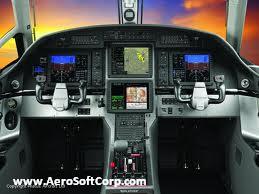
Compared to the King Air 200 twin, its major competitor, the PC-12's most significant design feature is its use of a single PT6A-67B turboshaft. Internally the PC-12's cabin is also longer (by 6cm/2.4in) and wider (by 15cm/6in) than the King Air 200's, and the same height. The cockpit features EFIS displays and the PC-12 is certificated for single pilot operation while each PC-12 built features a standard cargo door in the rear fuselage. Weather radar is an option but has been fitted to all production aircraft thus far. From 1997 the increased 4.5 tonne MTOW has been standard. New, smaller winglets were introduced in 1998.
The PC-12 is offered in standard nine seat airliner form, in a four passenger seat/freight combi version and as a six place corporate transport. A pure freighter model is under consideration. The PC-12 Eagle is a military special missions platform.
Most PC-12s built thus far have been corporate transports but recent important regulatory changes in Australia, Brazil, Canada and the USA have cleared single engine turboprops for IFR RPT operations in those nations. This has opened up new potential markets for the PC12 as a regional airliner, replacing older King Airs and elderly piston twins such as the Navajo Chieftain and Cessna 400 series.
Design and development
Pilatus announced the development of the PC-12 at the annual convention of the National Business Aviation Association (NBAA) in October 1989.The two prototypes were completed on 1 May 1991, with the first flight taking place on May 31, 1991.Certification of the type was originally planned for mid-1991 but a redesign of the wings (increase of wing span and addition of winglets to ensure performance guarantees were met) delayed this. Swiss certification finally took place on 30 March 1994, and U.S. Federal Aviation Administration approval followed on 15 July 1994.
As with many other Pilatus aircraft, the PC-12 is powered by a single Pratt & Whitney Canada PT6 turboprop engine (the PT6A-67B). It is certified for single-pilot IFR operations, though operators may choose to utilize a second flight crew member. Pilatus offers the PC-12 in a standard nine-seat airliner form, in a four-passenger seat/freight Combi version, and as a six-seat corporate transport with an option for a seven-seat by adding a three-seat bench in place of seats five and six. A pure freighter model is under consideration.
The PC-12M (Multipurpose) is based on the PC-12, but equipped with a more powerful electrical generation system that enables addition of additional power-consuming equipment. This enables the PC-12M to perform missions such as flight inspection, air ambulance, parachutist dropping,[citation needed] aerial photography, and aerial surveillance. This version is marketed in the United States as the PC-12 Spectre paramilitary special missions platform.
Pilatus announced the PC-12NG (Next Generation) at the 2006 NBAA meeting in Orlando, and officially launched it during the NBAA 2007 in Atlanta.The NG features a more powerful Pratt & Whitney PT6A-67P engine with better climb performance and an increase in maximum cruise speed to 280 kts TAS. The NG also features a Honeywell APEX glass cockpit. The revised cockpit includes automatic pressurization control as well as cursor controlled inputs to the navigation system.
The PC-12 NG winglets have also been modified from the original version.
Features
*A Pratt & Whitney Canada PT6A-67P engine, flat-rated at 1,200 SHP.A 330 cubic foot pressurized passenger cabin with seating for up to 9 passengers
*A maximum range of 1,560 nautical miles with 3 passengers, high speed cruise, NBAA IFR fuel reserve
*280 knot (322 mph) maximum cruise speed
*A high-lift wing for exceptional short-field performance
*Standard forward passenger door and large (53 in X 52 in) aft cargo door
*Retractable trailing-link landing gear capable of grass and unimproved field operation
*Certification for flight into known icing conditions
*State-of-the-art Honeywell Primus Apex avionics
*Single-pilot certification
Price:
The Pilatus PC-12 NG costs approximately $3.3 Million, which is 230% more expensive than the average for all Propeller Plane Jets & Prop Planes.
Seating:
This aircraft seats up to 9 passengers, which is the most of all Planes.
Range:
The Pilatus PC-12 NG can fly nonstop for up to 1,560 nautical mi, which is 652 nautical mi more than the average for all Propeller Plane Jets & Prop Planes. For reference:
NYC to Los Angeles - 2127 nautical miles
NYC to London - 3016 nautical miles
NYC to Tokyo - 5854 nautical miles
Cruise Speed (Long Range):
This aircraft can fly its maximum range while cruising at a speed of 271 knots, which is 27.2% faster than the average for all Propeller Plane Jets & Prop Planes.
Diamond has targeted the aircraft at the owner-pilot market, seeing it as more practical for single-pilot operations than the Eclipse 500 and the Cessna Citation Mustang. By limiting the altitude to 25,000 feet, it will be safer if pressurization fails. Diamond intends the D-JET to have a lower operating cost than other very light jets[citation needed].
On November 9, 2006, at the AOPA Expo in Palm Springs, California, USA, Diamond announced that ATP Flight School (ATP) placed the first fleet order of 20.Diamond D-JETs. ATP will provide factory-approved training to D-JET purchasers beginning in 2008.Toronto-based Chartright Air Group ordered 10 D-JET aircraft with expected delivery beginning 2010.
In February, 2008 Diamond announced that the aircraft will be built in a new plant in London, Ontario, Canada. This announcement came after the Government of Canada announced it was giving the company a “Cdn$19.6 million strategic, repayable investment” and the Government of Ontario announced that it had given the company Cdn$11 million. Diamond claims that research and development costs for the D-JET have been Cdn$95.2 million and that the plant to build the aircraft will cost an additional $100 million.
In October 2008 Canadian charter operator SwiftJet announced that they had ordered five D-Jets with options for ten more. SwiftJet's intention is to offer air taxi service "anywhere and anytime to destinations around the world." SwiftJet currently operates one Dassault Falcon 20 in the charter role.
The Government of Ontario loan was contingent on a matching loan from the federal Canadian government, which was not approved and so the 213 laid off employees have not been rehired.
The D-JET was initially to be powered by one Williams FJ33-4A-15 turbofan engine. That 1,564 lbf (6.96 kN) thrust engine was found in early 2008 to produce insufficient bleed air for cabin pressurization and other services. As a result a decision was made to switch to the Williams FJ33-4A-19 turbofan engine, which produces 1,900 lbf (8.5 kN) of thrust instead.
The switch in engines delayed the certification schedule and moved the projected first customer deliveries of the aircraft into the spring of 2009.Diamond is also developing a military trainer variant of the D-JET that will likely feature Martin-Baker lightweight ejection seats and is intended to sell for under US$3M.
The first flight of the D-JET was made on 18 April 2006 from the London International Airport (ICAO: CYXU) in Ontario, Canada the homebase of Diamond’s North American division. The flight was piloted by test pilot Gérard Guillaumaud and lasted 1:06 hours. The aircraft's public debut was at Oshkosh in July 2006.At that time Diamond expected certification to be complete by the middle of 2009 with deliveries starting at the same time.
The Diamond D-JET, partially assembled at the Oakland NBAA, November 8, 2007.
On Friday, 20 July 2007 Diamond Aircraft announced the roll out of its second D-JET, serial number 002. Serial number 002 is the first D-JET intended to conform to the expected production configuration in its structural layout and aerodynamic design. D-JET prototype serial number 002 first flew on Friday 14 September 2007.
It was joined by D-JET Serial Number 003, which first flew on April 15, 2008.
Flight testing and program development was halted in the spring of 2011 as the company lacked funds to proceed. After a failed campaign for federal government support, private investment was found and test flight resumed in September 2011.
In July 2012 the company announced that 700 hours of flight testing had been completed, reaching Mach 0.56 (346 kn (641 km/h) true airspeed) along with 30,000 pressurization cycles on a test fuselage. Winglets had been added to the aircraft that improved roll control at all speeds, especially in the stall. With that addition the design was frozen and the company commenced building production tooling for the fourth serial number. At this time certification was forecast for late in 2013 with production deliveries to commence in the third quarter of 2014.
# Description:
The D-JET is a composite, five-seat, single-engine jet aircraft produced by Diamond Aircraft Industries. The aircraft is undergoing flight testing, and carries a price tag of approximately US$1.9 M. It cruises at 240 knots, and takes a modest 15 minutes to get to 25,000 feet, the service ceiling. The Diamond D-Jet is considered a very light jet (VLJ) and is produced by Diamond Aircraft Industries. It is a composite, five-seat, single-engine jet aircraft which typically seats four to five passengers. This suave aircraft features a luxurious cabin and the latest in cockpit and powerplant technology.
The cabin of the D-Jet is lush, open, and quite spacious, with a seating configuration of two plus three. The rear bench comfortably accommodates three people or offers first class comfort for two. This bench folds down in a 60/40 design and is made of the highest quality leather in a style that rivals the finest luxury automobiles. The D-Jet seating arrangement offers fantastic legroom, giving passengers the space and comfort of a more expensive aircraft. The standard vapor cycle air conditioning allows the aircraft to be pre-cooled prior to boarding and ensures that passengers travel in comfort. There are three cabin windows on each side to let in plenty of relaxing natural light.
Baggage capacity aboard the Diamond D-Jet is flexible and spacious, allowing more gear than other aircraft. There is a large aft luggage compartment for long items and dual nose compartments for other large baggage. Space behind the rear folding seats can hold items that need pressurization or which are needed in flight.
The D-JET is powered by one Williams FJ33-5A turbofan engine, featuring FADEC which offers improved operation, reliability, efficiency, and maintenance. The engine is capable of as much as 1,900 pounds of thrust, providing a maximum airspeed of 315 knots or 362 mph, and a maximum range of 1350 nautical miles, or 1553 statute miles. The aircraft also has straight wings with angular winglets, and a durable, low-drag composite construction.
The cockpit of the Diamond D-Jet features an ergonomic design and a three-panel Garmin G1000 glass cockpit, with dual 12\\" Primary Flight Displays and a central
15\\" Multifunction Display, for better readability than other VLJs. There is also a center console mounted FMS controller and Garmin\\\'s GFC700 automatic flight control system. The system features dual aDHaRS, dual magnetometers, dual GPS, dual WaaS enabled NaV/CoM/ GPS, Mode S transponder, TaWS-B, and dual audio panels for ultimate convenience and safety.
Time to altitude: 7,620 m (25,000 ft) in 15 minutes
3)Class: Compact Light Jet
Manufacturer: Diamond Aircraft
Model : Diamond D-Jet
Seats: 4 - 5
Cabin Length: 11.6
Cabin Width: 4.9
Cabin Height: 4.8
#D-Jet construction:
The D-Jet is of lightweight composite construction featuring low and swept-back wings with winglets and a T-tail.
Flight deck:
The glass cockpit is fitted with an electrically driven vapour cycle air-conditioning system allowing the aircraft to be pre-cooled prior to boarding.
The aircraft's avionics system is based on the Garmin G1000 avionics suite and includes a three-panel Garmin G1000 glass cockpit with Garmin GDU 1240A 12in primary flight displays (PFDs), a centrally mounted Garmin GDU 1500 15in multi-function display (MFD), Garmin flight management system with a centre console-mounted keypad controller and Garmin GFC 700 3-axis automatic flight control system. The autopilot control unit for the GFC 700 automatic flight is placed for easy access just below the glarescreen.
The communications and navigation suite comprises a dual Garmin GIA 63W VHF communications set, VHF navigator with an instrument landing system (ILS) localiser and glideslope, a wide-area augmentation system (FAA WAAS) certified global positioning system (GPS), dual Garmin GRS 77 solid-state attitude and heading reference system (AHRS), dual Garmin GDC 74 digital air data computers, Garmin GTX 33 mode-S transponder, dual pilot static system, active traffic advisory system (ATAS), a TAWS-B terrain awareness system, a satellite data link for weather and support for XM radio in-flight information and entertainment and a 406MHz emergency locator transmitter.
Systems fitted as a customer option include: Garmin GWX 68 weather radar system with 12in antenna, Becker 3500 automatic direction finder (ADF), and Honeywell KN63 DME distance measuring equipment.
#Cabin:
The cabin provides five seats in a two-plus-three configuration. The rear-seat bench can comfortably accommodate three people or two executive-class passengers.
#Safety:
The D-Jet is fitted with de-icing systems and other active and passive safety systems. Redundant systems include the dual power supplies. The certified ceiling altitude is 25,000ft.The D-Jet's dual electrical system is based on two independent buses. One electrical bus is powered by a 200A starter / generator; and the other is supplied by a 70A alternator.
Each electrical system runs independently and the aircraft can operate on either system alone. Each system also has its own battery, so that in the unlikely event that one of the power-generating sources fails, the battery will continue to provide power to that system for a tim
#Engine:
The aircraft is powered by a single 8.45kN turbofan FJ33-5A (formerly designated FJ33-19) engine supplied by Williams International. It was decided in March 2008 to upgrade to the FJ33-5A rather than the FJ33-15, rated at 6.96kN, fitted on prototype aircraft. The engine air inlets are visible in the wingroots. The engine is fitted with full authority digital engine control.
The fuel capacity is 1,100l in the US Federal Aviation Administration (FAA) certified version of the aircraft. In the European Aviation Safety Agency (EASA) certified version the fuel capacity is 790l.Landing gear
In May 2008, Diamond Aircraft announced the selection of Mecaer America to provide nose and main landing gear systems for the D-Jet.
#Performance:
The D-jet can fly at a maximum speed of 583km/h. The cruise speed is 444km/h. The range and service ceiling are 2,500km and 7,620m respectively. The aircraft weighs around 1,175kg and its maximum take-off weight is 2,000kg.
The Dornier Do 27 was a German single-engine STOL utility aircraft, manufactured by Dornier GmbH (later DASA Dornier, Fairchild-Dornier). Configuration was a classic high-wing, "tail-dragger" aircraft with fixed landing gear.The Do 27 is one of the best choices when it comes to operation from small air strips. High quality workmanship combined with state of the art engineering made the Do a success in the late 50's.
History:
The Dornier Do27 was the first aircraft to enter production in Germany after World War II.
The first prototype Do27 was flown on 8 April 1955. Production took place in Germany, the first example flying in October 1956. More than 600 were build before production ended during 1965.The Do 27 traces back to the Do 25, which Professor Claude Dornier (Dornier was responsible for the Do 17 medium bomber in WW2) designed in Spain for a Spanish military requirement for a light general purpose utility aircraft. Two prototype Do 25s were built, the first was powered by a 110kW (150hp) ENMA Tigre GIVB engine and flew for the first time on June 25 1954. Subsequently CASA built 50 production aircraft as Do 27As for the Spanish air force (Spain designated the type C127).
Following this success the German military ordered the Do 27 in large numbers. Some 428 were delivered to Germany's armed forces from the mid 1950s to 1960, although these aircraft have since been retired. Small numbers were built for other military customers, and others for commercial use.
Features of the Do 27 design include a flat six Lycoming engine, a wide and relatively roomy cabin, wide track undercarriage and excellent STOL performance. The STOL performance in particular suited the Do 27 for use in undeveloped countries, and several have seen service in Africa and Papua New Guinea.
Do 27 models include the initial Do 27A and dual control Do 27B for Germany; the Do 27H series that was based on the A4 but with a more powerful engine and three blade prop; and the Do 27Q series, equivalent to the Do 27A.
The Do 27-4A which we flew with, is a light utility transport STOL aircraft, powered by one Lycoming GO-480-B1A6 engine and a Hartzell Propeller.
The cabin consists of:
a Fixed Pilot seat (adjustable on the ground) and a fixed co-pilot seat , The back-rest of this seat swivels and gives the co-pilot access to the cabin during flight.Passenger seat-bench for two facing forward with lots of leg room. The very large baggage space is located behind the seat-bench but only accessible from the cabin (no separate door).Two wing tanks with 110 liter each, some aircraft have two more wing tanks with 76 liter each.
#Average Speeds: cruising between 90 -115kt with a fuel burn of 13-16gal/h
Cross country flying is best with 100kt and calculating 14 gal/hr.
According to the aircraft manual there is NO stall speed with only the following minimum flying speeds
with nominal power and flaps45° = 27kt; idling and flaps45° = 42kt
with nominal power and flaps35° = 30kt; idling and flaps30° = 43kt
these minimum speeds are established above actual stall.Performance on take off and landing depends extremely on the weight (40% useful load) and on the procedure used,roll for take off and landing are from 80-150mdistances (over 15m/50ft obstacle) are double.Cross wind landings or better landing rolls in cross wind are a challenge!
The tail-wheel is free turning and not connected with the pedals. The fin and rudder was designed for slow flight-speeds and together with the body the lateral surface is very large. (one solution; land into the wind.The aircraft handles rough surfaces and off field operation extremely well.Today, more than 45 years after the last Do 27 left the production line, there are perhaps 100 Do’s still in flyable condition. Most of them are based in Europe, a few in America and as far as we could determine only 3 in South Africa
.
#Powerplants
Do 27H2 - One 255kW (340hp) Lycoming GSO480B1B6 flat six piston engine driving a three blade Hartzell propeller. Do 27Q5 - One 200kW (270hp) GSO480B1A6 driving a two blade prop.
#Performance
Do 27H2 - Max speed 245km/h (132kt), high speed cruise 212km/h (115kt), economical cruising speed 180km/h (97kt). Initial rate of climb 965ft/min. Service ceiling 22,000ft. Range with max fuel and no reserves 1360km (735nm). Do 27Q5 - Max speed 232km/h (125kt), 75% power cruising speed 211km/h (114kt), 60% power cruising speed 190km/h (103kt), economical cruising speed 175km/h (95kt). Initial rate of climb 650ft/min. Service ceiling 10,800ft. Range with max fuel and no reserves 1102km (595nm).
#Weights
Do 27H2 - Empty equipped 1170kg (2580lb), max takeoff 1848kg (4070lb). Do 27Q5 - Empty equipped 1130kg (2490lb), max takeoff 1848kg (4070lb).